Choosing the right venue is one of the most important decisions you’ll make when planning a corporate event in Dubai.
The city offers an impressive selection of luxury hotel ballrooms, waterfront locations, private dining spaces, conference facilities and distinctive event venues. Consequently, finding somewhere attractive is rarely the biggest challenge.
The real challenge is finding a location that suits your guests, supports your event programme and accommodates everything required for successful delivery.
A beautiful ballroom may have limited space for entertainment. A waterfront terrace might offer exceptional views but lack suitable facilities for a substantial stage. Meanwhile, a venue with an attractive hire package could involve additional charges for production, catering or external suppliers.
These details can have a significant impact on the event’s success and overall budget.
At The Event Company Dubai, we believe venue selection should begin with understanding the event itself, rather than choosing a property from photographs.
This guide explores how to evaluate corporate event venues in Dubai, which questions to ask before signing a contract and the common mistakes companies should avoid.
1. Define Your Event Before Searching for a Venue
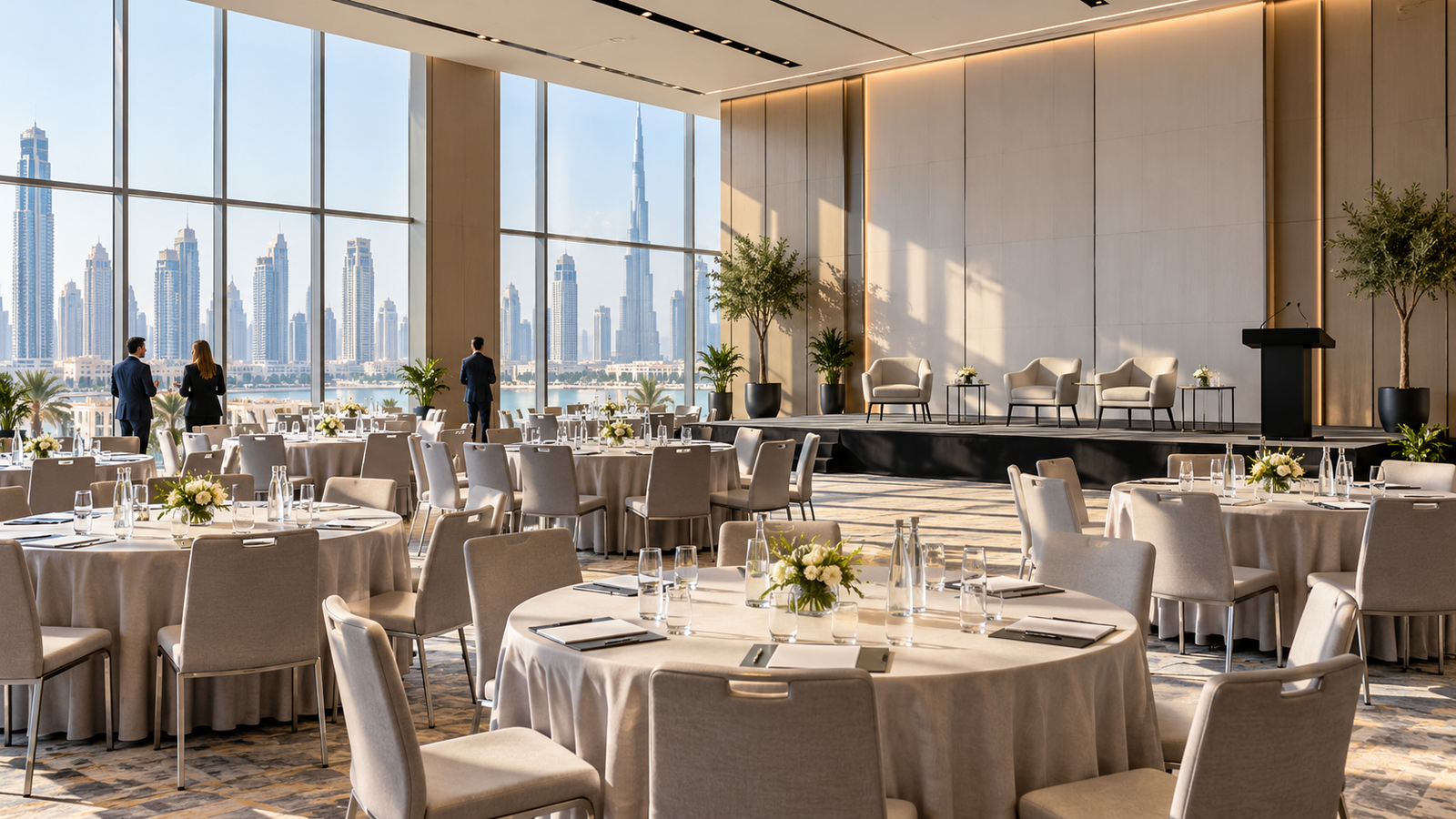
Before contacting hotels or requesting venue proposals, establish what your event needs to achieve.
A company awards ceremony requires a different environment from a client networking reception. Similarly, a formal gala dinner has different requirements from a product launch or staff celebration.
Start by identifying the event format, approximate guest numbers and intended programme.
Consider whether guests will remain seated, move between different areas or participate in activities.
Will you need a stage, video screens, entertainment or space for product displays? Are you planning a seated dinner, buffet or standing reception?
Furthermore, establish the atmosphere you want to create.
An elegant executive dinner might suit a private hotel dining room, whereas a large annual celebration may require a ballroom with extensive production facilities.
Creating a clear event brief before searching makes it easier to identify suitable venues and avoid wasting time reviewing inappropriate options.
2. Check the Actual Capacity, Not Just the Advertised Number
Venue capacity figures can be misleading when taken out of context.
A room advertised for 300 guests may accommodate that number for a standing reception but considerably fewer for a seated dinner with a stage and dance floor.
Therefore, always establish the capacity for your intended layout.
Common event arrangements include theatre-style seating, classroom layouts, banquet tables, cabaret seating and standing receptions.
Each configuration requires different amounts of space.
For example, a gala dinner with ten-person tables needs sufficient room for chairs, service access and guest movement.
Adding a substantial stage, technical control position or dance floor reduces the available dining area.
You should also consider the position of pillars, entrances and permanent fixtures.
Ask the venue for a floor plan showing your proposed arrangement.
Ideally, review it with your event organiser before committing to the booking.
An event should feel comfortable and welcoming, not crowded simply because the advertised maximum capacity appears sufficient.
3. Choose a Convenient Location for Your Guests
Dubai is a large city, and travel arrangements can influence whether guests arrive relaxed and on time.
The ideal location depends on where your attendees are travelling from.
For events involving international visitors, proximity to accommodation and convenient airport transfers may be important.
A staff celebration might benefit from a location that employees can reach easily from their workplace.
For executive dinners and client hospitality, the surrounding environment and ease of arrival may carry greater weight.
Consider parking availability, valet services, taxi access and nearby public transport where relevant.
Traffic conditions at your proposed arrival and departure times also deserve attention.
Additionally, check whether the venue provides clearly marked entrances and suitable access for guests with mobility requirements.
If a significant number of employees will attend, organised transport may be worth exploring.
A prestigious venue loses some of its appeal when guests struggle to find it, park or arrange their journey home.
4. Compare Hotels, Restaurants and Standalone Event Venues
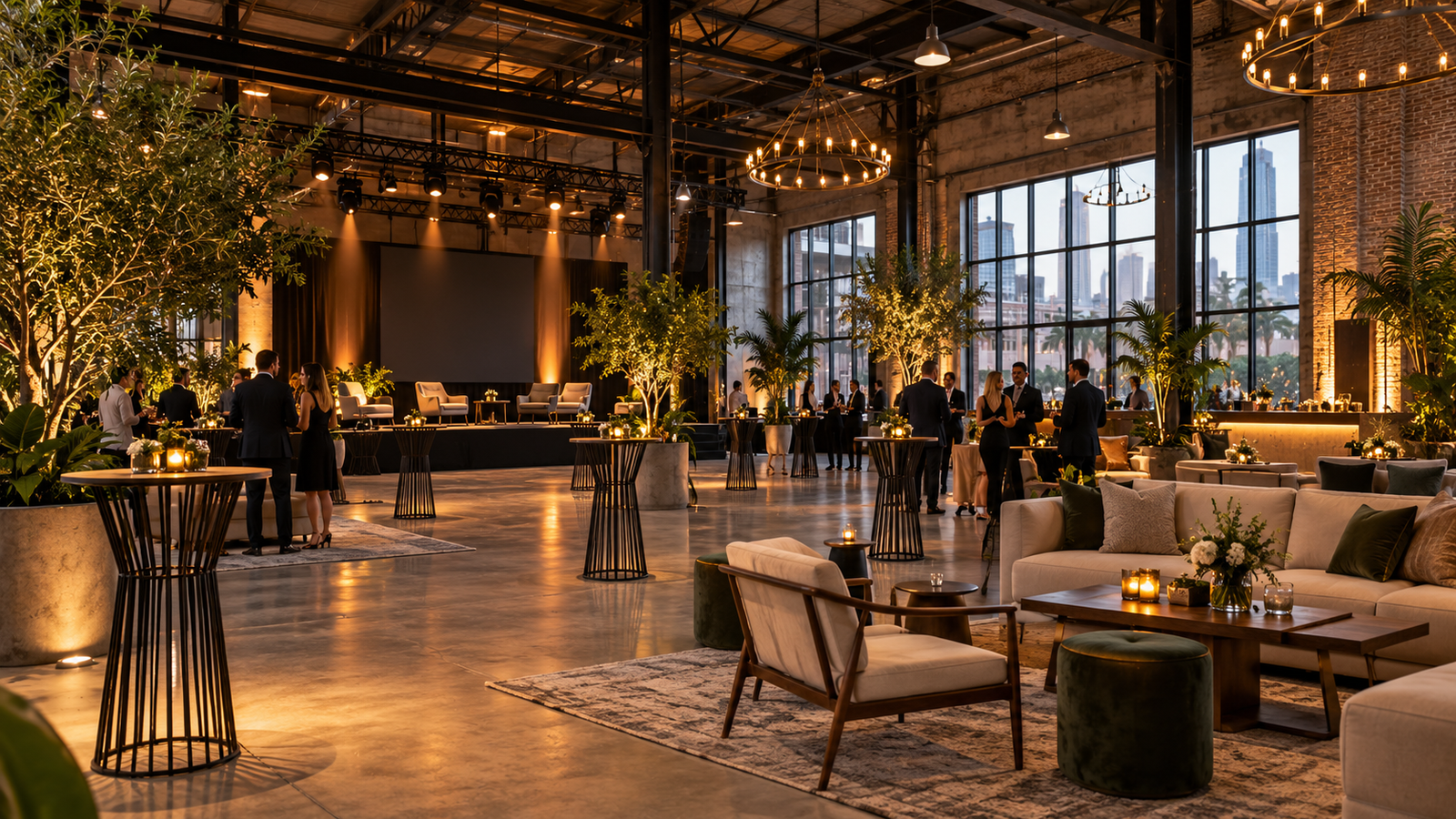
Different venue categories offer different advantages.
Luxury Hotel Ballrooms
Hotel ballrooms remain a popular choice for corporate celebrations, awards ceremonies, conferences and gala dinners.
They often provide integrated catering, guest facilities, experienced banqueting teams and flexible room configurations.
However, check what the package includes and whether the hotel imposes restrictions on external suppliers.
Private Restaurants and Dining Venues
Restaurants can work particularly well for smaller corporate dinners, client appreciation events and executive gatherings.
Their principal advantages may include atmosphere, established hospitality services and a more intimate setting.
Nevertheless, space for speeches, entertainment or substantial event production may be limited.
Standalone Event Spaces
Dedicated event venues can offer greater flexibility for bespoke designs, themed celebrations and product launches.
Some provide existing technical infrastructure, while others operate as relatively empty spaces requiring additional equipment and services.
Outdoor and Waterfront Locations
Terraces, gardens and beachfront spaces can create memorable corporate occasions during suitable weather conditions.
However, outdoor events require particular attention to climate, sound restrictions, electrical arrangements and contingency planning.
Rather than assuming one venue category is superior, select the format that best supports your event.
5. Understand What the Venue Package Actually Includes
An attractive venue quotation doesn’t necessarily reflect the complete cost of hosting your event.
Some packages include room hire, standard furniture, catering and basic audiovisual facilities.
Others quote these services separately.
Before comparing proposals, request a clear explanation of what’s included.
For example, does the package provide a stage and microphones? Are additional screens or lighting required? Does the venue include appropriate furniture for the intended layout?
Check whether quoted catering arrangements include beverages, service staff and any relevant minimum-spend commitments.
Also establish whether applicable taxes, service charges and other mandatory fees appear in the total.
A venue offering a lower initial quotation may ultimately prove more expensive once additional requirements are considered.
Consequently, compare the complete event cost rather than room hire alone.
A transparent proposal should make it easy to understand what you’re receiving and which elements require separate arrangements.
6. Check External Supplier and Entertainment Restrictions
This is one of the most important questions to ask before booking a corporate event venue in Dubai.
Some hotels and venues maintain preferred supplier arrangements for audiovisual equipment, staging, entertainment or other services.
These arrangements may influence your choice of event organiser and technical suppliers.
For example, a venue might require its appointed contractor to manage certain electrical connections or rigging arrangements.
Another may permit external production suppliers but charge additional fees for access or technical supervision.
Before signing a contract, establish:
- Can we appoint our preferred event management company?
- Are external production suppliers permitted?
- Can we bring our own entertainers and musicians?
- Are additional venue charges applicable?
- Does the venue require specific technical contractors?
- Who must approve staging, sound and lighting arrangements?
These questions matter particularly when planning events involving live bands, specialist entertainment or elaborate production.
Supplier restrictions don’t necessarily make a venue unsuitable. However, they should be understood before committing to the location.
7. Evaluate the Venue’s Technical Facilities
A venue may look spectacular in photographs yet present difficulties for technical production.
For corporate events involving presentations, entertainment or awards, assess the existing infrastructure carefully.
Important considerations include electrical capacity, ceiling height, stage dimensions, screen positions and suitable locations for sound and lighting equipment.
The shape of the room also affects the audience experience.
Pillars can obstruct views, while difficult acoustics may reduce speech clarity.
If you’re planning live entertainment, check whether the stage can comfortably accommodate the performers and their equipment.
Similarly, an awards ceremony may require space for presenters, award recipients, cameras and technical operators.
A professional production assessment can identify limitations before they become expensive problems.
Ideally, the venue and technical team should agree on the essential specifications before you finalise the booking.
8. Inspect Loading Access and Setup Arrangements
Guests rarely notice how equipment enters a venue. However, access restrictions can significantly affect event planning.
Large production installations may require substantial equipment deliveries, specialist handling and carefully coordinated setup schedules.
Before confirming a location, establish where suppliers can unload equipment and whether service lifts, loading bays or dedicated access routes are available.
Check the dimensions of any relevant entrances and lifts.
Also ask about delivery restrictions, access permissions and the hours during which suppliers may work.
Some venues have limited loading access or share facilities with other events.
Therefore, suppliers may need additional time or equipment to complete installation.
The available setup period matters just as much.
An elaborate awards ceremony cannot necessarily be installed, tested and rehearsed within the same window as a simple corporate dinner.
Finally, confirm the dismantling arrangements.
A venue requiring immediate overnight removal may create different logistical requirements from one allowing equipment collection the following day.
9. Consider Catering Quality and Service Arrangements
Food and hospitality play an important role in the success of corporate events.
However, selecting a menu is only one part of the decision.
The venue must also deliver the catering service in a way that complements your event programme.
For a formal awards dinner, food service should work around presentations and speeches.
A networking reception may benefit from circulating refreshments and convenient food stations.
Meanwhile, a staff celebration might require a more informal dining experience.
During your venue assessment, discuss menu flexibility, dietary requirements and the available service formats.
Ask whether tasting sessions are possible and how final guest numbers affect catering commitments.
For events involving speeches or performances, establish how the banqueting team will coordinate with the event manager.
The right food, served at the wrong moment, can still interrupt the guest experience.
10. Review Outdoor Venue Considerations Carefully
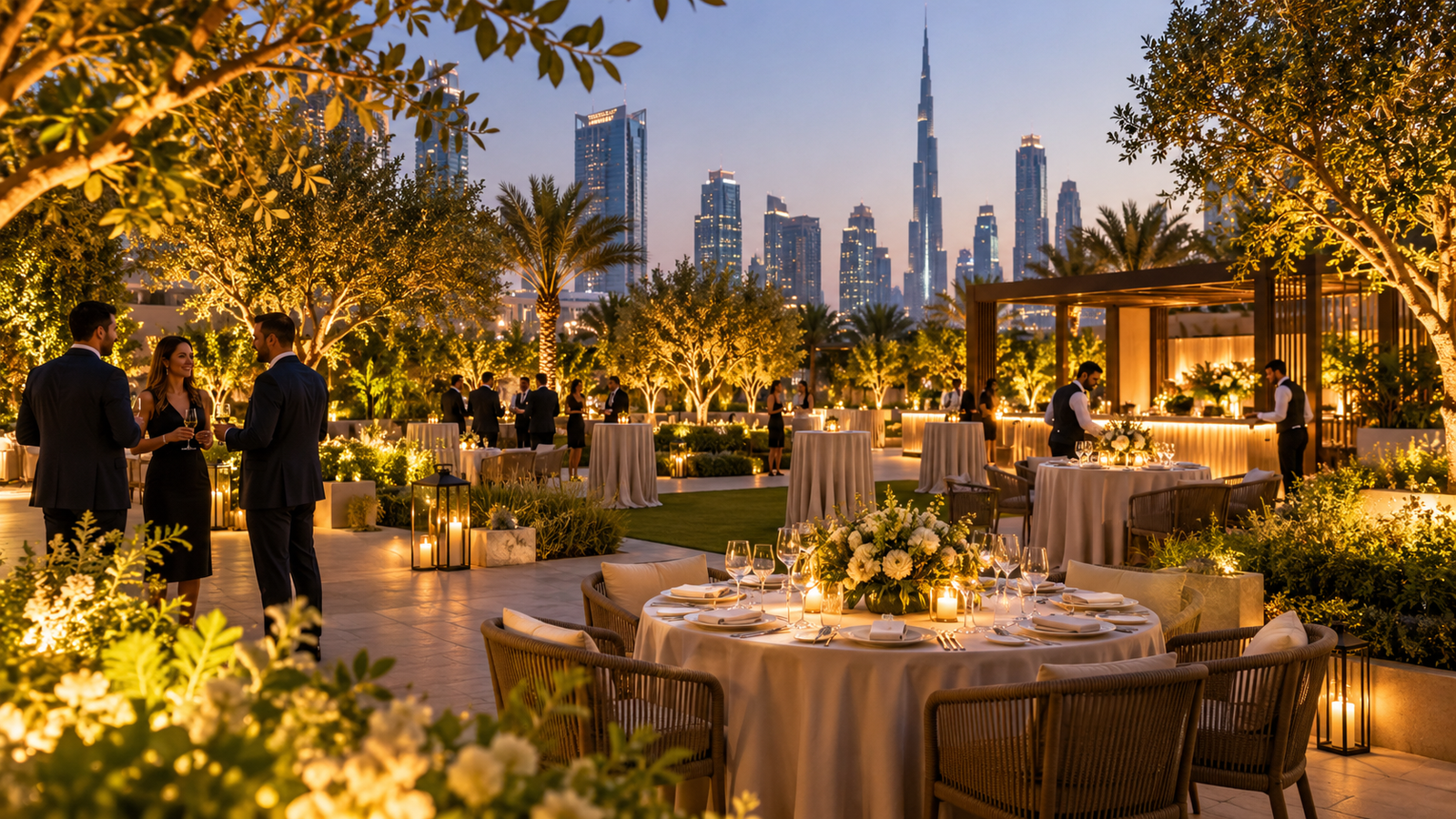
Dubai’s cooler months provide excellent opportunities for outdoor corporate events.
Waterfront terraces, gardens and open-air venues can create distinctive experiences that differ from conventional hotel functions.
Nevertheless, outdoor events introduce considerations that don’t apply in the same way to enclosed spaces.
Weather is the most obvious factor.
High temperatures, wind, humidity or unexpected rain can affect both guest comfort and technical arrangements.
Consequently, discuss an appropriate contingency plan before finalising an outdoor venue.
Other considerations include power distribution, sound restrictions, lighting, toilets, accessibility and protection for technical equipment.
Some locations may also have limitations concerning temporary structures, entertainment or event operating hours.
An appealing outdoor setting should be evaluated with the same attention to safety and practicality as an indoor venue.
11. Ask About Permits and Venue Approvals
Different corporate event formats may involve different permit and approval requirements in Dubai.
The Dubai Department of Economy and Tourism operates an event-permit system for relevant business and entertainment events.
Additional conditions may apply depending on the venue’s jurisdiction, proposed activities and technical installations.
For example, an event involving live performances or temporary structures may require different documentation from a straightforward private dining function.
When discussing a venue, ask which approvals apply and who is responsible for obtaining them.
Also establish whether the venue requires specific documents from your event organiser or contractors.
Early clarification helps prevent complications during final preparation.
For current official requirements, refer to the Dubai Department of Economy and Tourism.
12. Check Branding, Decoration and Event Design Flexibility
Corporate events often need to reflect the company’s identity.
Depending on the occasion, this might involve branded backdrops, welcome signage, stage graphics, table styling or bespoke scenic installations.
However, venues can have restrictions concerning how decorations and branding are installed.
Some prohibit attaching materials to walls, ceilings or permanent fixtures.
Others may require approval for large scenic structures, special effects or unusual installations.
Before confirming the venue, discuss your proposed design and ask which areas can accommodate branding.
If the occasion involves a product launch or company anniversary, ensure the available space supports the desired visual presentation.
A venue’s existing architecture can provide a wonderful backdrop, but it should complement rather than conflict with your event concept.
13. Compare the Complete Cost Before Booking
Corporate venue quotations can vary substantially because the underlying packages may be different.
When comparing locations, consider the complete anticipated expenditure.
This might include venue hire, catering, production, entertainment, furniture, staffing and transport.
Additionally, review charges associated with overtime, additional guests, external suppliers and changes to the agreed arrangements.
An attractive room-hire offer may not remain competitive if substantial additional production is necessary.
Conversely, a venue that already provides suitable infrastructure may reduce the number of separate services you need to arrange.
Avoid relying exclusively on headline prices.
Instead, request a comparable breakdown for each shortlisted location.
A professional event organiser can help identify exclusions and assess the operational implications of different venue proposals.
14. Read the Contract and Cancellation Terms
Before signing a venue agreement, review the commercial terms carefully.
Important details include payment schedules, deposits, minimum-spend commitments, cancellation conditions and amendment procedures.
Check how the venue handles changes to the event date, guest numbers or programme.
You should also establish when the venue requires final catering numbers and whether you can make reasonable adjustments.
For larger corporate events, clarify the arrangements for unexpected circumstances that could prevent the event proceeding.
The contract should identify the spaces you’re booking and the agreed access times.
Furthermore, any important commitments concerning technical facilities or external suppliers should be confirmed in writing.
Clear contractual arrangements protect both parties and reduce misunderstandings.
15. Arrange a Site Visit Before Making the Final Decision

Photographs, venue brochures and virtual tours are helpful starting points.
However, an in-person site visit can reveal details that don’t appear in promotional material.
During the inspection, consider the guest arrival experience, room proportions, acoustics, lighting and accessibility.
Walk through the likely event programme.
Where will guests register? How will they reach their seats? Can everyone see the stage? Is there enough room for catering service?
If your event involves substantial production, include your event organiser or technical representative in the visit.
They can assess stage positioning, power availability, supplier access and installation requirements.
For larger events, visiting the venue before signing is particularly valuable.
The objective is to establish whether the venue works in practice, not simply whether it looks attractive.
16. Create a Shortlist and Compare Venues Objectively
After researching suitable locations, narrow the options to a manageable shortlist.
Three venues with different strengths are usually more useful than reviewing numerous properties without a clear decision-making framework.
Compare them against the same criteria:
| Consideration | What to Assess |
|---|---|
| Capacity | Suitable layout and comfortable guest space |
| Location | Travel convenience, parking and accessibility |
| Catering | Menu quality, service format and flexibility |
| Production | Technical facilities and additional requirements |
| Suppliers | External contractor and entertainment restrictions |
| Logistics | Setup access, loading and dismantling |
| Budget | Complete estimated cost and exclusions |
| Contract | Payment, cancellation and amendment terms |
Rather than selecting the venue that scores highest for appearance alone, consider which option delivers the best overall balance.
The ideal location should suit the occasion, fit the budget and support professional delivery.
17. Why Professional Venue Sourcing Can Be Valuable
Finding a venue independently may be straightforward for a small meeting or private dinner.
However, selecting a location for a larger corporate event often requires more detailed evaluation.
An experienced event management company can help identify suitable venues, assess technical requirements and compare complete proposals.
This may include reviewing room layouts, supplier restrictions, production infrastructure and operational access.
Professional venue sourcing can also help ensure that the chosen location supports the event concept before contracts are finalised.
For companies arranging gala dinners, awards ceremonies, conferences and major celebrations, this coordination can reduce the burden on internal staff.
More importantly, it helps prevent expensive mistakes that may only become apparent after the venue has been booked.
Frequently Asked Questions About Corporate Event Venues in Dubai
What is the best area in Dubai for a corporate event?
The most suitable area depends on your guests, event format and preferred atmosphere. Business Bay, Downtown Dubai, Dubai Marina, Jumeirah and other districts offer different advantages. Accessibility and venue suitability should take priority over location alone.
How far in advance should we book a corporate event venue?
Popular venues and peak-season dates can book well in advance. Early enquiries are advisable for large events or occasions requiring substantial production, although availability varies.
Can we use our own event production company at a Dubai hotel?
This depends on the hotel’s supplier policies. Some venues permit external contractors, while others have preferred or mandatory technical arrangements. Confirm the conditions before signing.
Are catering and audiovisual equipment included in venue hire?
Inclusions vary. Some packages provide basic equipment and hospitality, while others require separate arrangements. Always request a detailed quotation.
What should we check before paying a venue deposit?
Confirm the agreed spaces, capacity, total cost, payment terms, cancellation conditions, supplier restrictions and setup arrangements. Important commitments should appear in the booking agreement.
Can an event company help us find a corporate venue in Dubai?
Yes. An experienced event organiser can help evaluate venues, compare proposals and coordinate the location with the wider event requirements.
Find the Right Venue for Your Next Corporate Event
Choosing a corporate event venue in Dubai involves much more than selecting an attractive location.
Guest comfort, practical access, catering, technical infrastructure, supplier restrictions and commercial terms all contribute to the success of the occasion.
By evaluating these factors before booking, companies can make better-informed decisions and avoid unnecessary complications.
At The Event Company Dubai, we help businesses plan and deliver professional corporate events, including venue sourcing, event management, production and entertainment.
Whether you’re organising an awards ceremony, gala dinner, conference, company celebration or VIP reception, our team can help you explore suitable venues and coordinate the arrangements required for your event.
Planning a corporate event in Dubai?
Contact The Event Company Dubai with your proposed date, guest numbers, preferred location, event format and approximate budget to discuss your requirements.
