One of the first questions companies ask when planning an event is: How much will the production cost?
It’s a perfectly reasonable question, but one that rarely has a straightforward answer.
Event production in Dubai can range from relatively simple technical arrangements for a corporate meeting to elaborate staging, lighting, sound and visual installations for gala dinners, award ceremonies, product launches and large-scale celebrations.
Even two events with identical guest numbers can have very different production requirements.
The venue, stage design, audiovisual equipment, entertainment, event duration and technical staffing all influence the final quotation.
At The Event Company Dubai, we believe understanding these factors is the best starting point for developing a realistic event budget.
Rather than publishing arbitrary prices that may not reflect your requirements, this guide explains what drives event production costs in Dubai, what a professional quotation should include and how companies can make informed decisions before committing to suppliers.
1. What Is Included in Event Production?
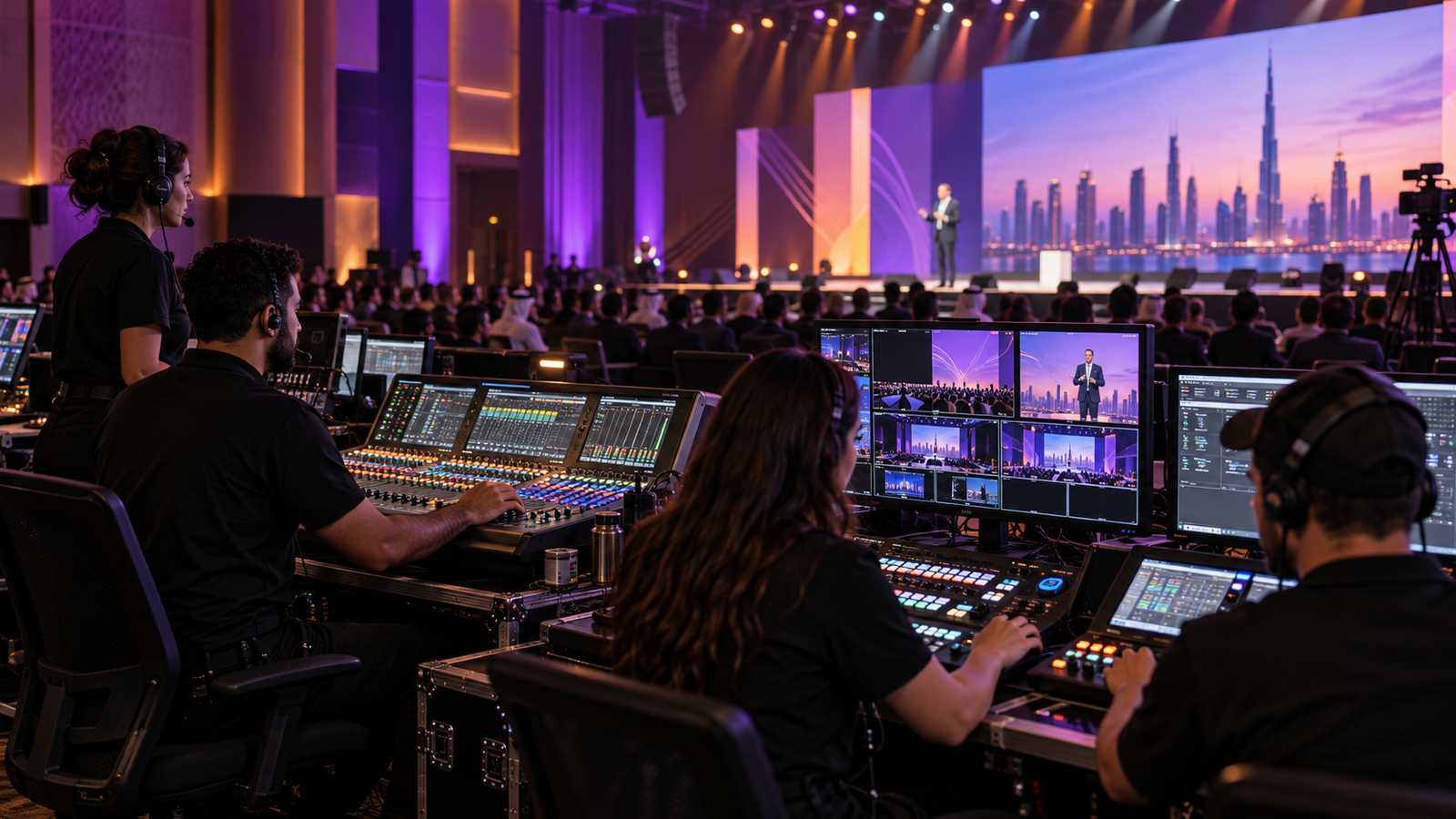
Before comparing quotations, it’s important to understand what event production actually involves.
Event production is the technical, physical and operational work required to bring an event concept to life.
Depending on the occasion, this can include:
- Stage design, construction and scenic elements
- Professional sound systems and microphones
- Architectural and stage lighting
- LED screens, projection and video equipment
- Technical crew and equipment operators
- Power distribution and electrical requirements
- Event branding and scenic installations
- Equipment transportation, installation and dismantling
- Technical planning, show coordination and rehearsals
Not every event requires all these services.
A corporate presentation in a hotel meeting room may only need appropriate microphones, screens and basic lighting.
A major company awards ceremony, on the other hand, could require a substantial stage, multiple screens, sophisticated lighting, custom graphics and a dedicated technical production team.
There is also an important distinction between event production and complete event management.
Venue hire, catering, guest transport, entertainment fees and event management may be quoted separately, depending on the scope of services.
Understanding where production begins and ends is essential when comparing proposals.
2. Why Event Production Costs Vary So Much
The single biggest reason production prices differ is that every event has its own requirements.
Consider two companies organising an evening celebration for 200 guests.
The first has booked a hotel ballroom with an existing stage, suitable sound equipment and a built-in screen.
The second wants a bespoke stage, custom-designed scenery, a large LED backdrop, extensive lighting and a live band.
Although the guest count is identical, the production requirements are substantially different.
Other factors include the length of the event, time available for setup, venue access and the number of technical personnel required.
The event’s purpose also makes a difference.
For a conference, speech clarity and presentation reliability may be the priorities.
For an awards ceremony, stage appearance, lighting cues and video playback could be central to the experience.
For a live entertainment event, the sound system, stage layout and musician requirements become particularly important.
A meaningful production quotation therefore starts with understanding the event, rather than simply counting attendees.
3. Event Staging and Set Design
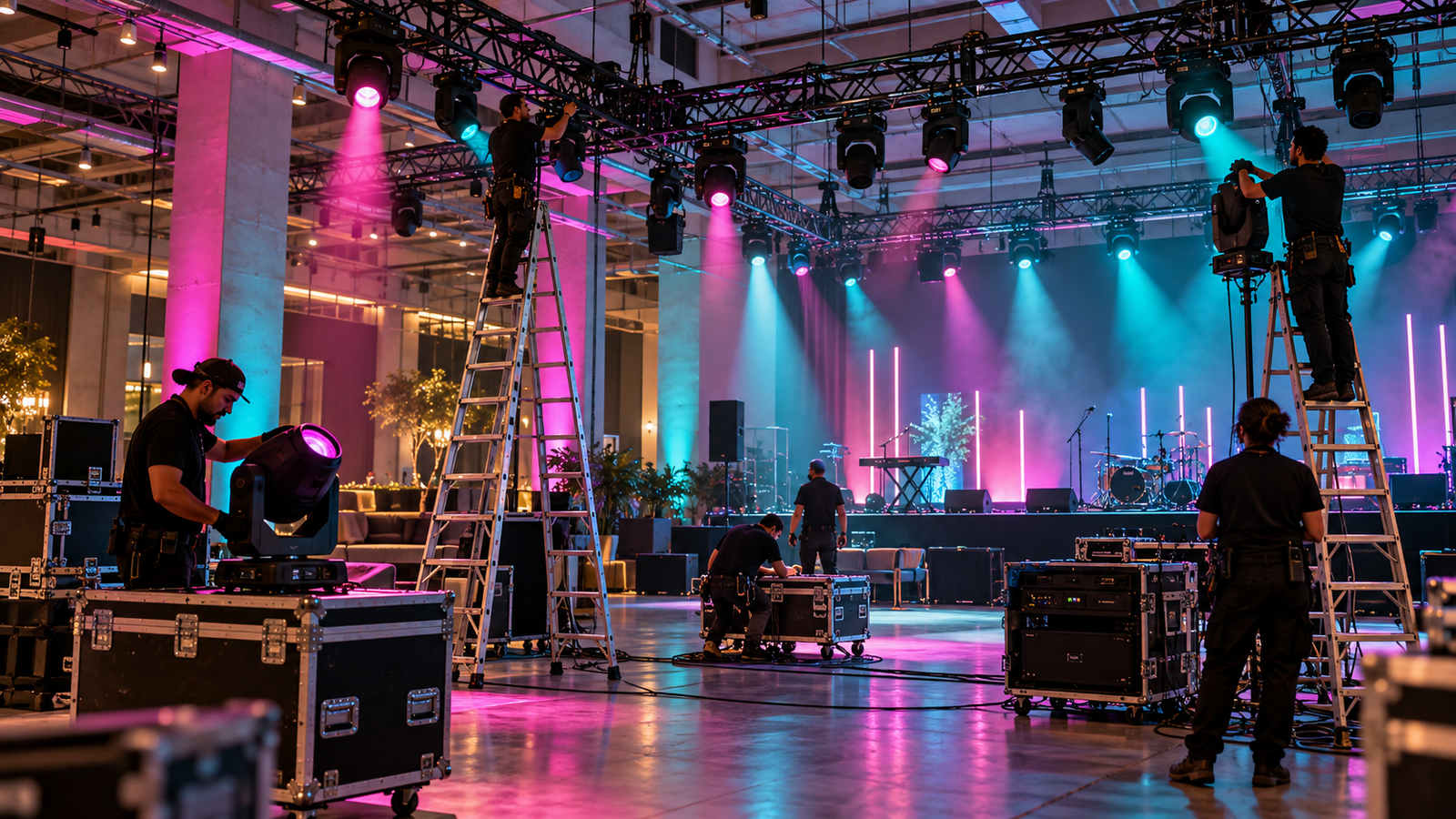
The stage is often the visual focal point of a corporate event.
Its dimensions, construction, finishing and design can significantly influence production expenditure.
A relatively simple stage may be suitable for presentations or speeches.
More elaborate events might require a custom-shaped platform, scenic backdrop, integrated screens, decorative structures or specialist finishes.
Several factors affect staging requirements:
Stage dimensions: A presenter and lectern need considerably less space than a live band or group awards presentation.
Height and accessibility: Stage height affects visibility, while steps, ramps and access arrangements must be planned appropriately.
Construction and finish: Standard modular platforms differ from bespoke scenic construction.
Load requirements: Heavy equipment and certain performance activities may require additional structural considerations.
Venue restrictions: Floor protection, loading access, rigging permissions and installation times can affect the method of construction.
Before commissioning a stage, establish exactly what will happen on it.
A well-designed stage should support the event programme, provide good audience visibility and complement the venue without introducing unnecessary complexity.
4. Professional Sound Systems and Audio Production
Good sound is essential to almost every corporate event.
Guests need to hear speeches, presentations and performances clearly, regardless of where they are seated.
However, the equipment required depends on much more than guest numbers.
Room dimensions, ceiling height, acoustics, seating layout and the type of audio being presented all influence sound-system design.
A conference with several presenters may require multiple wireless microphones, a mixing console and carefully positioned loudspeakers.
A gala dinner with background music could have different requirements.
An event featuring a professional party band may need additional microphones, stage monitors, mixing equipment and a dedicated sound engineer.
Audio quotations should clearly identify the equipment being supplied and whether setup, testing and technical operation are included.
It is also important to distinguish between a venue’s existing audio system and equipment suitable for professional live entertainment.
A sound system adequate for announcements may not be appropriate for a full musical performance.
Investing in suitable audio is rarely an area where excessive cost-cutting delivers a good result.
Guests may forgive simple décor, but struggling to hear an important speech or performance can significantly affect their experience.
5. Event Lighting: More Than Making the Stage Visible
Lighting can transform the atmosphere of an event without requiring extensive changes to the venue itself.
At a formal corporate dinner, warm lighting can create an elegant setting.
For a product launch, carefully coordinated lighting can draw attention to the main presentation.
An awards ceremony may use spotlights, stage washes and programmed lighting effects to highlight important moments.
Different lighting requirements involve different equipment, installation methods and operating arrangements.
Some events require little more than appropriate stage illumination.
Others involve moving lights, architectural uplighting, programmable fixtures and a dedicated lighting operator.
Lighting design should consider the venue’s existing fixtures, ceiling structure, available power and the desired visual effect.
It is particularly important to coordinate lighting with photography and video coverage.
A beautifully atmospheric room can become difficult to photograph if speakers and award recipients are insufficiently illuminated.
When discussing production expenditure, the objective should be to identify the lighting elements that meaningfully improve the experience.
6. LED Screens, Projection and Video Content
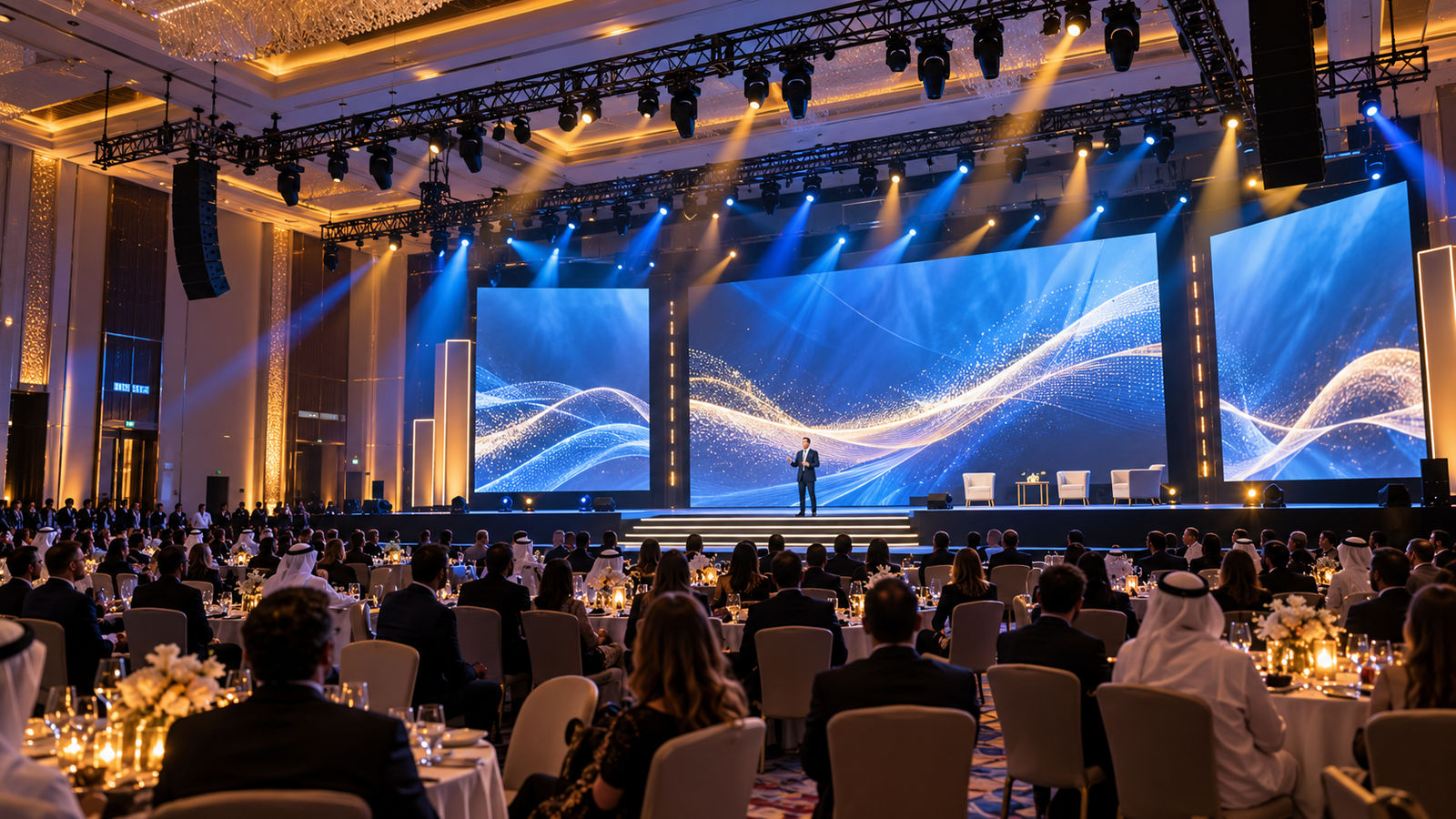
Screens frequently account for an important part of the production specification.
Corporate events may require displays for presentations, company branding, video content, live camera feeds or entertainment.
The choice between LED screens and projection depends on the venue, content, viewing distances and practical conditions.
LED installations are often used to create prominent visual backdrops and support dynamic stage designs.
Projection may be suitable for certain conferences, presentations and controlled indoor environments.
Screen dimensions are only one part of the cost.
Image resolution, installation structure, processing equipment, content playback and technical operation must also be considered.
For events involving multiple screens, live cameras or complex video sequences, additional equipment and specialist personnel may be necessary.
Before requesting a quotation, establish what the screens are expected to display.
A single company logo requires a very different approach from an awards ceremony involving nominee videos, animated graphics and live camera coverage.
The production design should match the intended content rather than assuming that larger screens automatically create a better experience.
7. The Venue Can Significantly Affect Production Costs
One of the most overlooked factors in event production budgeting is the venue itself.
Two ballrooms of a similar size may have very different technical facilities and operating conditions.
Some venues provide stages, screens, microphones and lighting as part of their event packages.
Others may offer relatively little infrastructure or require approved suppliers to manage certain services.
Before selecting a venue, establish:
- What technical equipment is already included?
- Can external production suppliers provide equipment?
- Are there preferred or exclusive audiovisual contractors?
- What electrical facilities are available?
- Are ceiling rigging points suitable and approved for the intended equipment?
- What are the loading and unloading arrangements?
- How much time is allowed for setup and dismantling?
- Are there restrictions on sound levels or performance times?
A venue with a higher overall hire charge may sometimes reduce the amount of additional production required.
Conversely, a seemingly attractive venue package may involve additional technical expenditure.
This is why production planning should begin before the venue booking is finalised whenever possible.
8. Technical Crew, Installation and Event Staffing
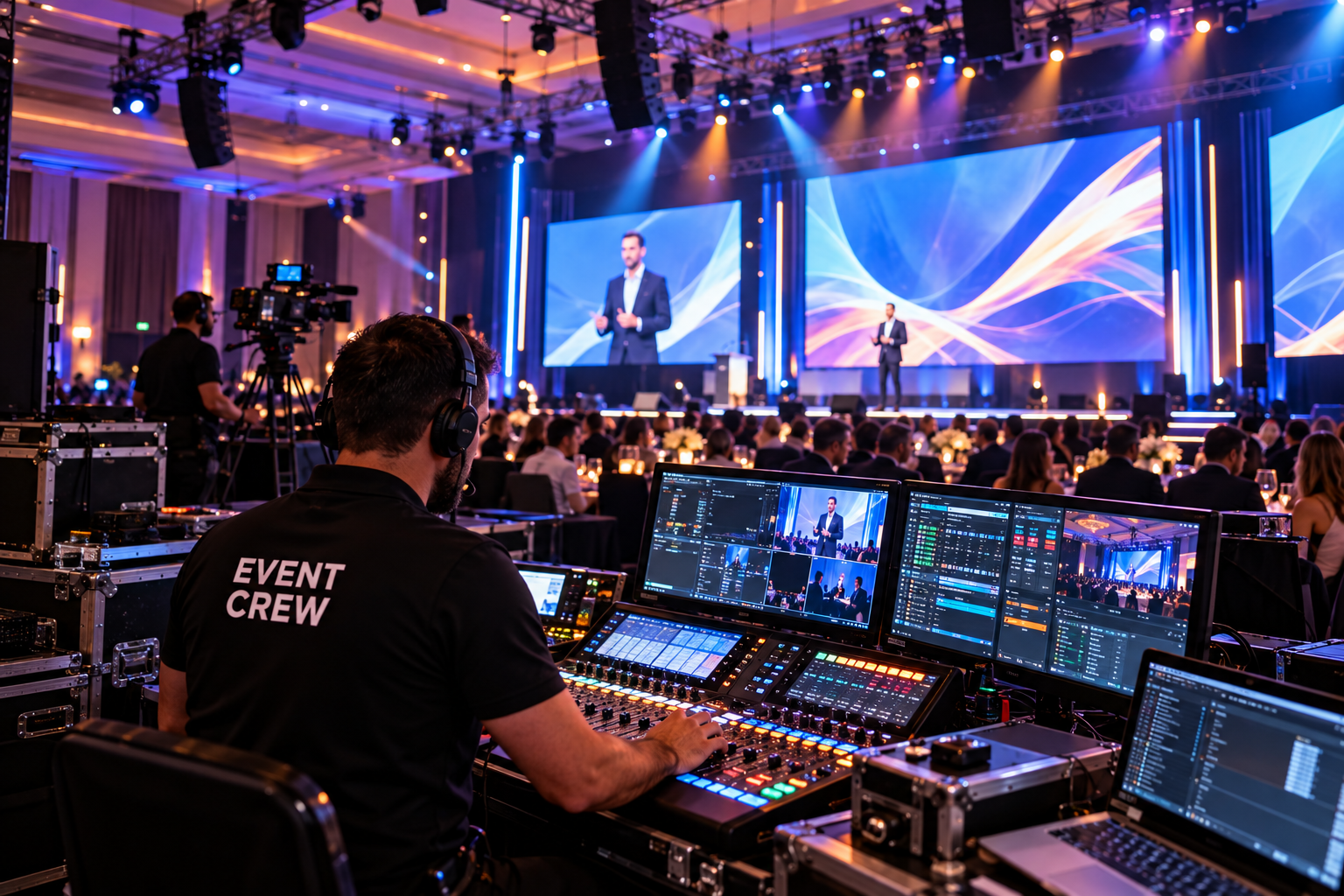
Equipment is only part of a professional production quotation.
Qualified personnel are needed to transport, install, test, operate and dismantle the equipment safely and effectively.
Depending on the event, the production team may include sound engineers, lighting technicians, video operators, stage technicians and production managers.
More complex events may also require dedicated show callers, rigging specialists or additional operational crew.
Staffing requirements depend on the technical specification and the amount of preparation involved.
An event requiring installation the previous day, rehearsals and a full evening programme will usually need more crew hours than a short presentation using the venue’s existing equipment.
9. Build Your Production Budget Around a Clear Specification
Before comparing quotations, define the event format, approximate guest numbers, venue, timings and the experience you want to create. A technical supplier should be able to distinguish essential requirements from optional enhancements.
The specification should cover audio, lighting, screens, staging, power, installation access, technical rehearsals and breakdown. Where the venue already provides equipment, ask whether it is appropriate for the actual programme rather than assuming it will cover every requirement.
10. Look Beyond the Headline Equipment Price
A production quote may exclude transport, labour, extra operating hours, rigging, power distribution or specialist content creation. Compare what is included, who is responsible for delivery, and how unexpected changes will be approved.
For a professionally managed event, the right solution is not automatically the cheapest equipment package. Reliability, appropriate technical design and experienced crew matter just as much.
11. How to Request an Accurate Event Production Quotation
Share your proposed date, venue or location, approximate audience size, event schedule and budget range. If you have a floor plan or event brief, include it. For complex productions, a site visit or technical meeting may be necessary before the final specification is confirmed.
Planning Event Production in Dubai?
At The Event Company Dubai, we can coordinate event production alongside event management, entertainment and venue requirements, helping the technical arrangements support the wider guest experience.
Tell us about your event and we’ll review what is needed before recommending an appropriate approach.
