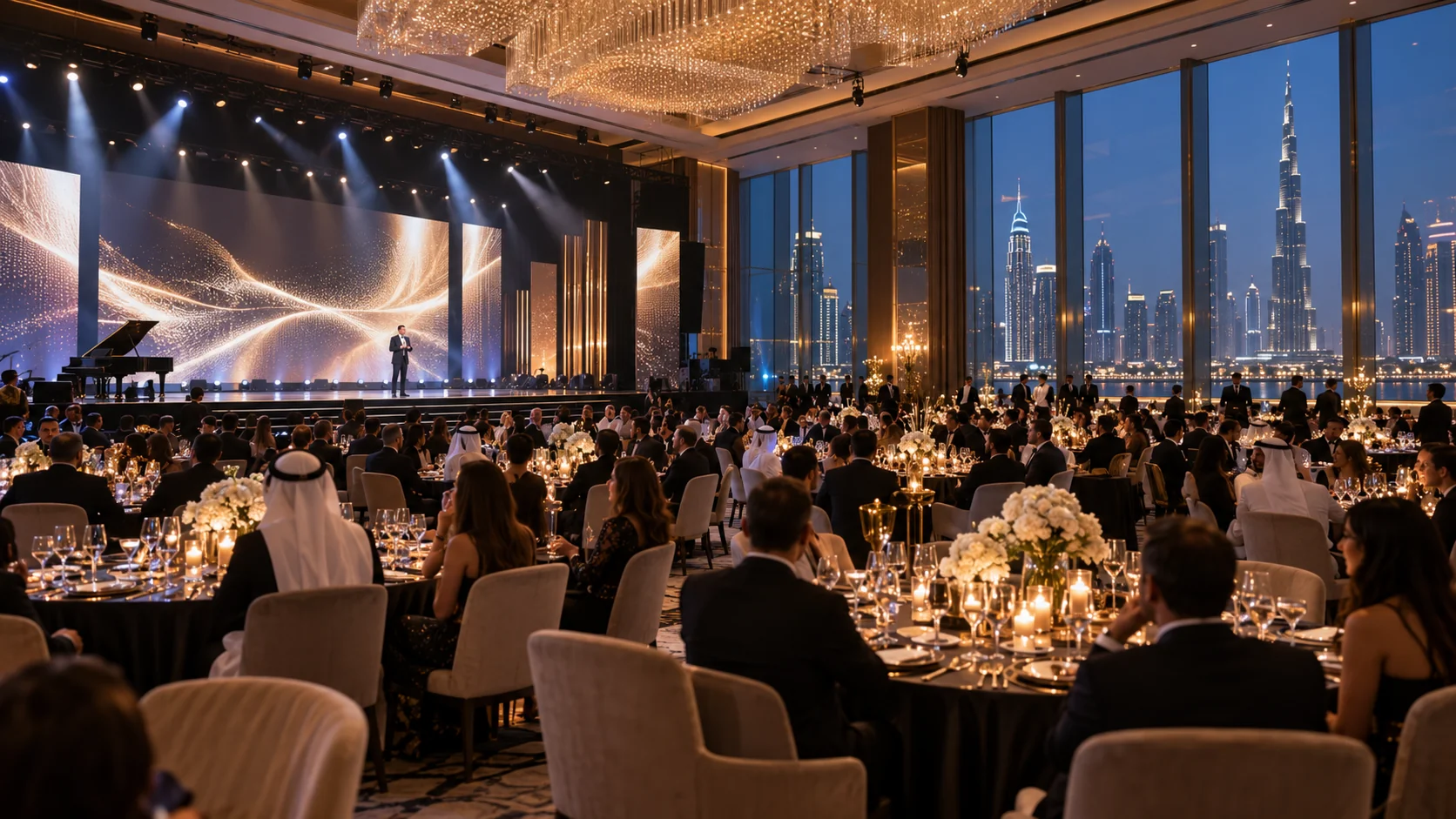
Planning a corporate event in Dubai can be an exciting opportunity, whether you’re organising an annual company celebration, an awards ceremony, a client appreciation evening or an important business conference. With an exceptional choice of hotels, venues, entertainment and production services, Dubai offers almost unlimited possibilities.
However, a successful corporate event involves considerably more than booking an attractive venue and arranging catering.
Behind every memorable event are dozens of decisions concerning budgets, guest experience, entertainment, logistics, technical production and timing. Overlooking even one important detail can create unnecessary costs, last-minute complications or an experience that falls short of expectations.
At The Event Company Dubai, we believe successful events begin with clear objectives, thoughtful planning and professional coordination.
This guide explores what companies should consider before booking a corporate event in Dubai, including the questions worth asking, common mistakes to avoid and how to approach the planning process with confidence.
1. Start With the Purpose of Your Corporate Event
Before looking at venues, entertainment or event themes, establish exactly what you want the event to achieve.
Different corporate occasions have very different requirements.
An awards ceremony may focus on celebrating achievement and recognising employees, while a client appreciation dinner could be designed to strengthen relationships and reinforce your company’s reputation.
A conference, meanwhile, may prioritise presentations, networking and communicating important business information.
Ask yourself:
- Who is the event for?
- What should guests remember afterwards?
- Is the occasion primarily formal, social or educational?
- What message does the company want to communicate?
- How will we judge whether the event was successful?
Defining these objectives early makes every subsequent decision easier.
For example, an evening celebrating employee achievements may benefit from a carefully structured awards presentation followed by dinner and live entertainment. A networking reception might require a completely different layout, shorter speeches and entertainment that encourages conversation rather than dominating it.
The most effective corporate events are planned around their purpose, not simply around what looks impressive.
2. Establish a Realistic Event Budget
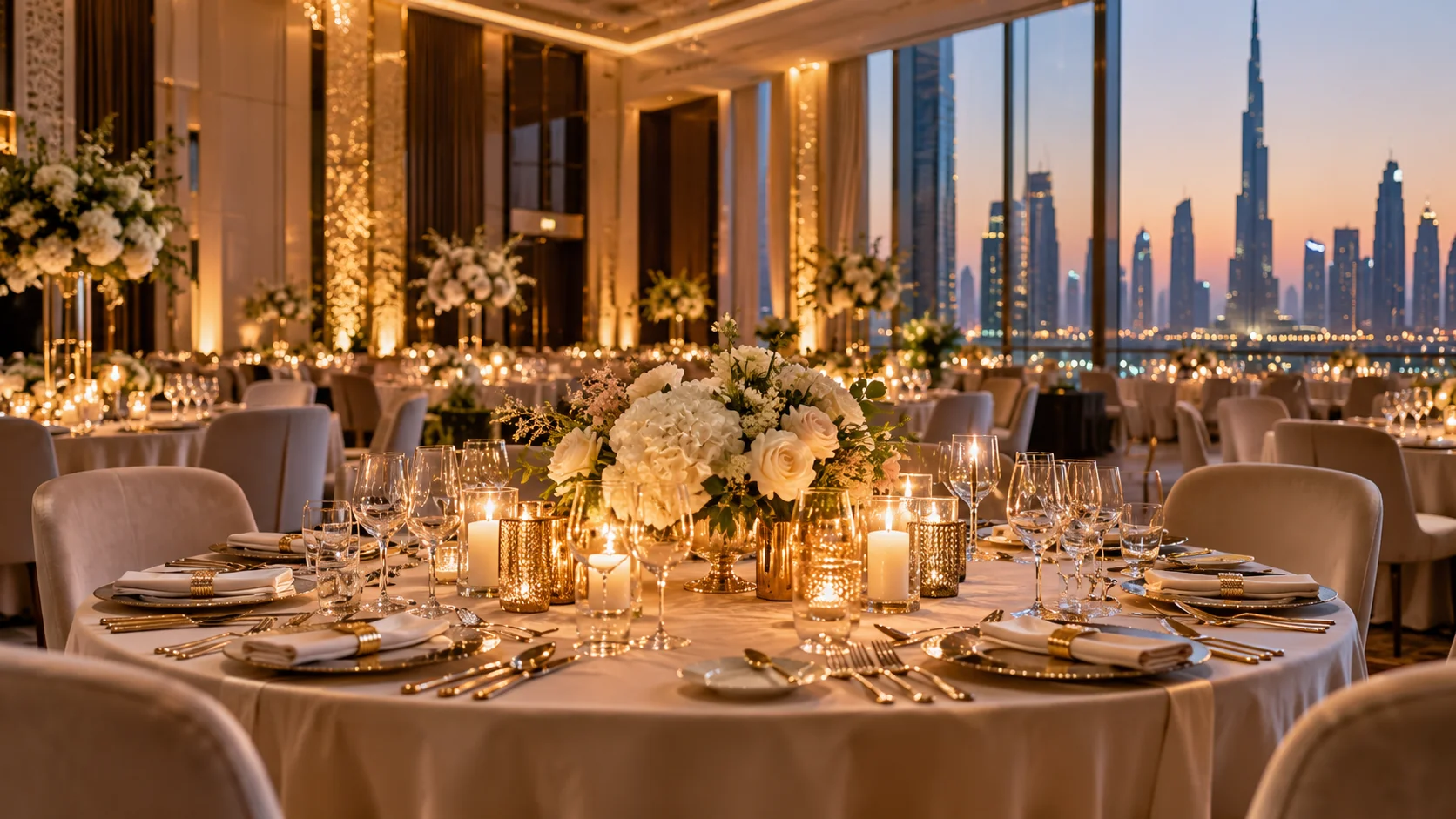
One of the most important stages of corporate event planning in Dubai is establishing a realistic budget before requesting detailed proposals.
Corporate event costs vary enormously depending on the event format, location, guest numbers, production requirements and level of service expected.
A relatively straightforward company dinner and a fully produced gala awards ceremony may involve similar guest numbers but entirely different operational requirements.
Your budget may need to account for:
- Venue hire and catering
- Staging, lighting, sound and audiovisual production
- Entertainment, presenters and performers
- Event design, theming and decoration
- Photography and videography
- Guest registration and hospitality
- Event management and operational staffing
- Transportation, permits and other logistical requirements
Some venues include basic equipment, furniture or technical facilities within their packages. Others require additional suppliers or impose restrictions on external contractors.
These distinctions can substantially affect the overall quotation.
Rather than requesting an elaborate proposal without giving any financial guidance, it is generally more productive to discuss an approximate working budget or an approved spending range.
A professional event company can then explain what is achievable, where investment will have the greatest impact and which elements may need adjusting.
It is also wise to maintain a contingency allowance for reasonable changes or unexpected requirements.
The objective isn’t necessarily to spend more. It is to ensure that the available budget is allocated where it delivers the best experience.
3. Choose the Right Date and Time
Dubai’s corporate events calendar can become particularly busy during the cooler months, when outdoor functions, conferences, exhibitions and major business gatherings compete for venues and suppliers.
The date you choose can influence availability, event format, guest attendance and the practical arrangements required.
Before confirming a date, consider major exhibitions, public holidays, religious observances and other events that may affect your intended audience.
If you’re inviting international guests, also consider travel schedules and whether attendees will be arriving specifically for the occasion.
An evening celebration scheduled immediately before a working day may require a different programme from a weekend event.
For outdoor gatherings, Dubai’s climate is another important consideration. Pleasant evening conditions during the cooler season can make terraces, gardens and beachfront venues attractive, while hotter months generally favour comfortable indoor spaces.
Where possible, identify two or three suitable dates before beginning your venue search.
Flexibility may provide access to better venue options and make coordinating entertainment and production considerably easier.
4. Select a Venue That Works Operationally
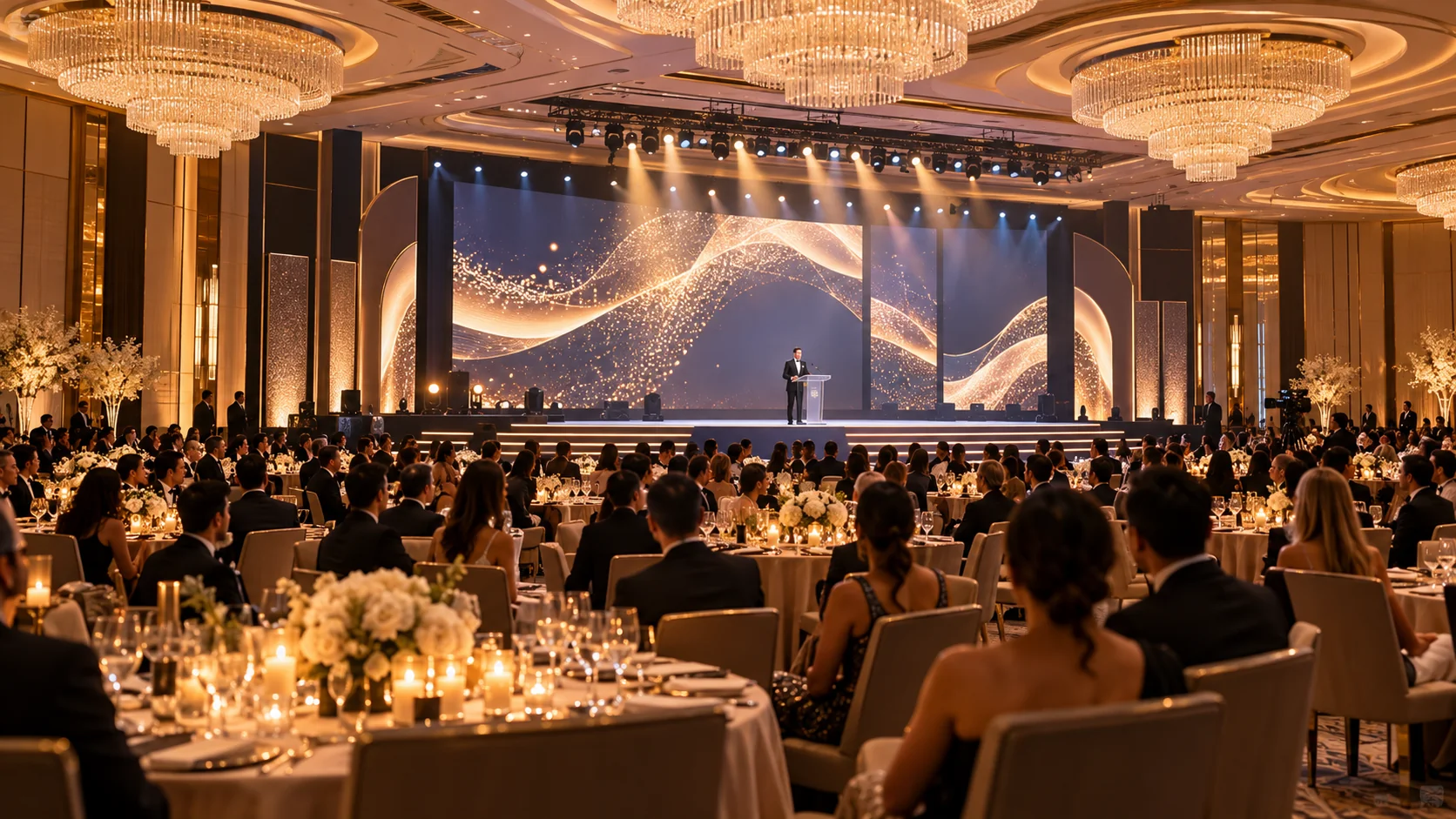
Dubai offers an outstanding variety of corporate event venues, from luxury hotel ballrooms and waterfront terraces to private dining spaces, exhibition facilities and distinctive standalone locations.
But an impressive venue isn’t necessarily the right venue.
One of the most common event-planning mistakes is selecting a location based on appearance before establishing whether it can accommodate the intended programme.
Consider the following questions:
Capacity and layout: Can the venue comfortably accommodate your guests in the format you require? A space suitable for a standing reception may have a significantly lower capacity when configured for a seated dinner with a stage and dance floor.
Location and accessibility: Is the venue convenient for attendees? Consider parking, valet facilities, taxis, transport connections and access for guests with mobility requirements.
Technical infrastructure: Does the venue have adequate electrical capacity, suitable rigging arrangements, sufficient ceiling height and practical access for production equipment?
Supplier restrictions: Are external caterers, entertainers and technical contractors permitted, or must you use the venue’s preferred suppliers?
Operational access: When can suppliers begin setting up? How long is available for rehearsals and dismantling? Are there restrictions on noise or working hours?
These considerations may not appear particularly glamorous, but they can determine whether an event runs smoothly.
A venue should complement the intended experience while accommodating everything required to deliver it.
5. Understand Event Permissions and Venue Requirements
Dubai has established procedures governing different types of events, activities and entertainment.
Depending on the nature and location of your event, permits, venue approvals or additional documentation may be required.
The Dubai Department of Economy and Tourism provides an event permit system covering categories including business and entertainment events. Other requirements may apply depending on the relevant authority, venue and proposed activities.
Professional entertainment, temporary structures, outdoor installations and ticketed events can introduce additional considerations.
Importantly, the requirements for a private company dinner may differ from those for a large public event.
Before confirming suppliers or announcing arrangements, establish which approvals apply and who is responsible for obtaining them.
Your venue and appointed event organiser should be involved in this conversation early.
Further information is available from the Dubai Department of Economy and Tourism.
Planning for approvals in advance helps avoid unnecessary complications closer to the event date.
6. Think Carefully About the Guest Experience
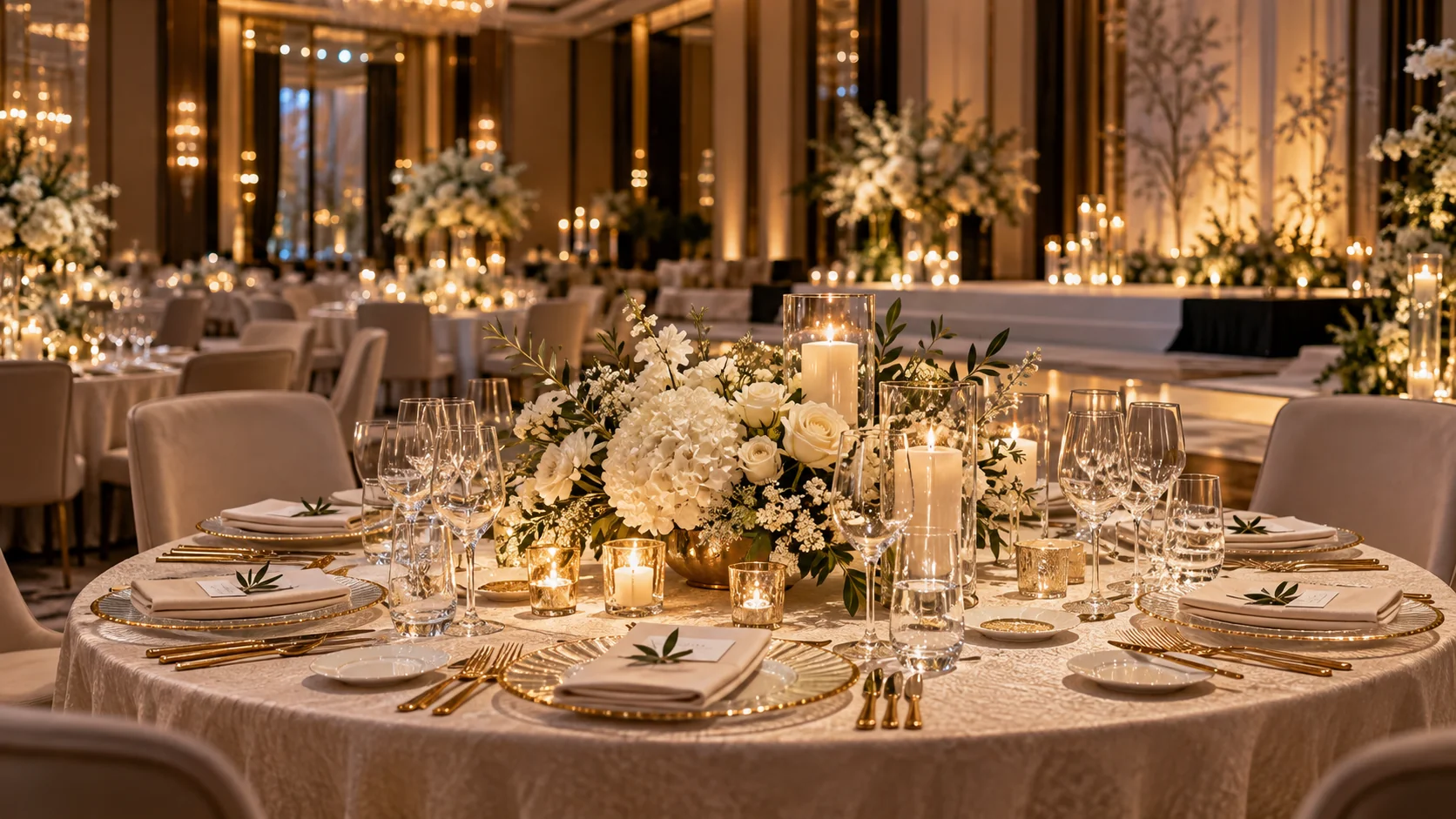
An event should be considered from the guest’s perspective, starting long before they enter the venue.
How will they receive their invitation? Will they understand the dress code, arrival arrangements and programme? Is registration straightforward?
Once guests arrive, the experience should feel coordinated and welcoming.
Consider the journey through the event:
Arrival: Clear directions, welcoming staff and efficient guest registration.
Reception: Appropriate refreshments, comfortable surroundings and an opportunity to meet other attendees.
Main programme: A well-paced sequence of presentations, speeches, entertainment or awards.
Hospitality: Food and beverage service coordinated around the programme rather than interrupting important moments.
Departure: Convenient transport arrangements and an organised conclusion.
Audience demographics also matter.
An event attended by senior executives and international clients may call for a different tone from an informal staff celebration.
Cultural awareness, accessibility, dietary requirements and language considerations should all form part of the planning.
The objective is to create an experience where guests can enjoy the occasion without noticing the operational work happening behind the scenes.
7. Choose Entertainment That Suits the Occasion
Entertainment can transform a corporate event, but the right choice depends on the audience, venue and objectives.
A sophisticated gala dinner might benefit from elegant live music during the reception, followed by a carefully timed headline performance.
A company celebration may work better with an energetic party band, DJ or interactive entertainment.
Other events might feature a professional master of ceremonies, cultural performers, close-up magic or musicians providing background atmosphere.
Before booking entertainment, establish:
- The audience profile and preferred musical or performance style
- Whether the entertainment should be background or a central feature
- Available performance space and technical facilities
- Performance duration and scheduling requirements
- Any venue restrictions affecting sound or staging
- Dressing rooms, access and rehearsal requirements
For many corporate events, entertainment works best when considered as part of the overall programme rather than added at the final stage.
A live band performing while guests are expected to listen to an important presentation, for example, is an obvious programming conflict.
Equally, an entertainer positioned in an unsuitable space may struggle to engage the audience.
Selecting the right performers and integrating them into the schedule helps create a more natural, memorable experience.
8. Don’t Underestimate Technical Event Production

Professional event production involves much more than placing speakers beside a stage.
Sound, lighting, video screens, staging and technical operations all contribute to how guests experience an event.
For a conference, clear speech reproduction and reliable presentation systems may be the highest priorities.
For an awards ceremony, lighting design, video content, stage entrances and well-timed audio cues can help give the occasion a polished, professional atmosphere.
For a live entertainment event, the technical specification may need to accommodate several performers, instruments and changes throughout the programme.
Important considerations include sightlines, microphone requirements, screen visibility, power distribution, stage dimensions and equipment access.
A production schedule should also allow sufficient time for installation, testing, rehearsals and troubleshooting.
Technical planning is particularly important when multiple suppliers are involved.
Clear responsibility for equipment, operation and coordination helps prevent duplicated arrangements, compatibility problems and last-minute surprises.
9. Build a Programme That Flows Naturally
A well-designed event programme creates momentum and allows each part of the occasion to receive the attention it deserves.
An evening corporate celebration could include guest arrival, a welcome reception, an opening address, dinner, awards presentations, entertainment and informal socialising.
However, the timing between these elements is just as important as the content itself.
Long speeches can disrupt the atmosphere. Delayed dinner service may leave guests frustrated. Poor transitions between presentations and entertainment can make an otherwise impressive event feel disjointed.
A detailed event running order should identify the timing of every key moment, the responsible personnel and any associated technical cues.
This document becomes particularly important when coordinating presenters, entertainment, catering and venue teams.
Professional rehearsals are advisable for events involving complex presentations, performances or award sequences.
The most successful programmes appear effortless precisely because the details have been carefully considered beforehand.
10. Decide Who Will Manage the Event
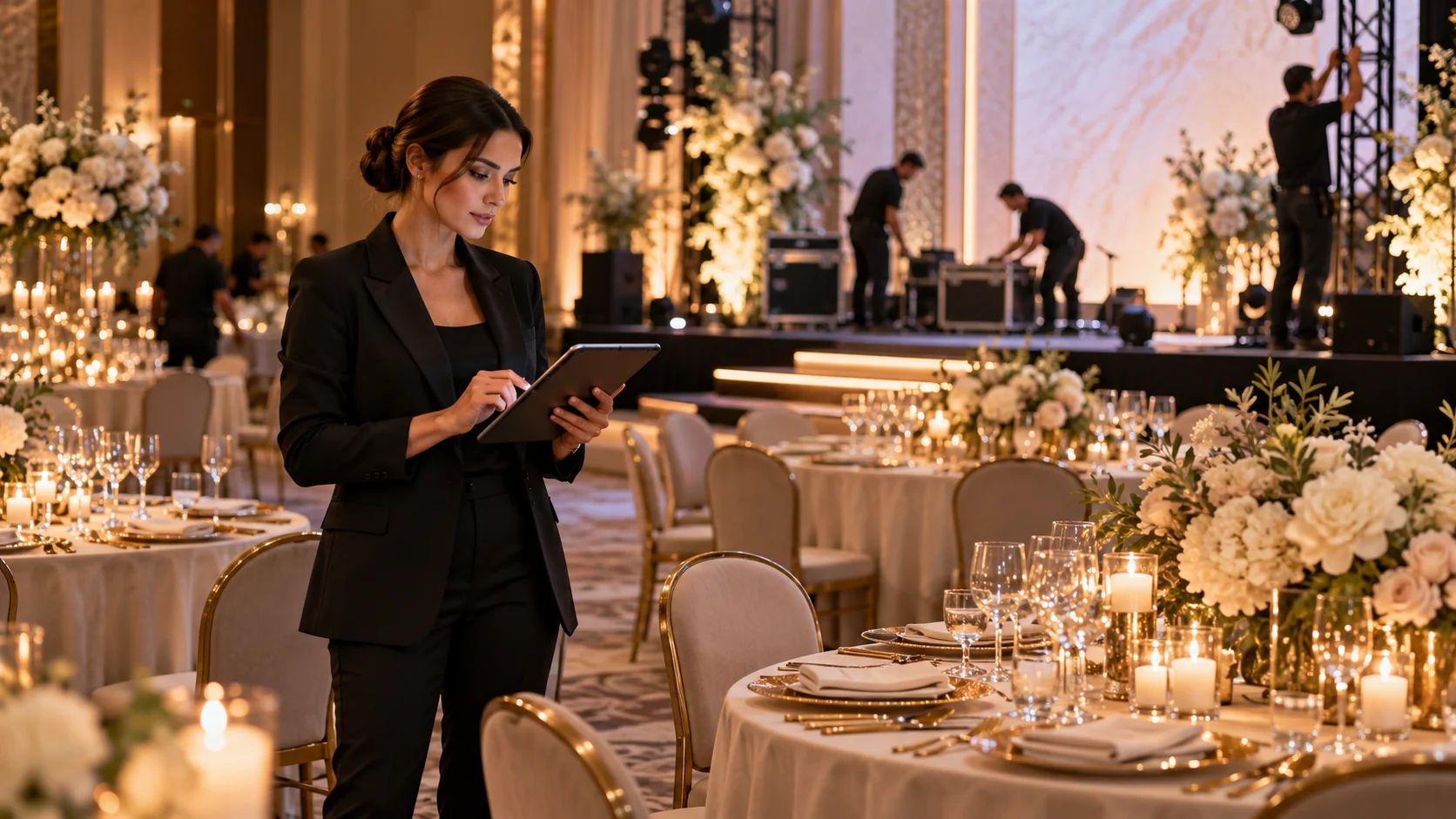
One question companies sometimes overlook is who will actually manage everything on the day.
For smaller, straightforward functions, an internal organiser working directly with a venue may be sufficient.
More complex corporate events can involve multiple contractors, entertainment bookings, production teams, hospitality providers and changing requirements.
This is where appointing an experienced event management company can offer considerable value.
A professional organiser can coordinate the planning process, establish responsibilities, develop operational schedules and provide a central point of contact for suppliers.
An event manager should also be responsible for addressing problems as they arise, without repeatedly interrupting the company representative hosting the occasion.
Before appointing an event company, ask:
- What exactly is included in your management service?
- Who will be responsible for our event?
- Are suppliers managed and coordinated centrally?
- How are changes and additional costs approved?
- Who supervises setup, rehearsals and the event itself?
- What arrangements are in place for unexpected issues?
Clear answers help establish expectations and reduce the risk of misunderstandings.
11. Give Your Event Enough Planning Time
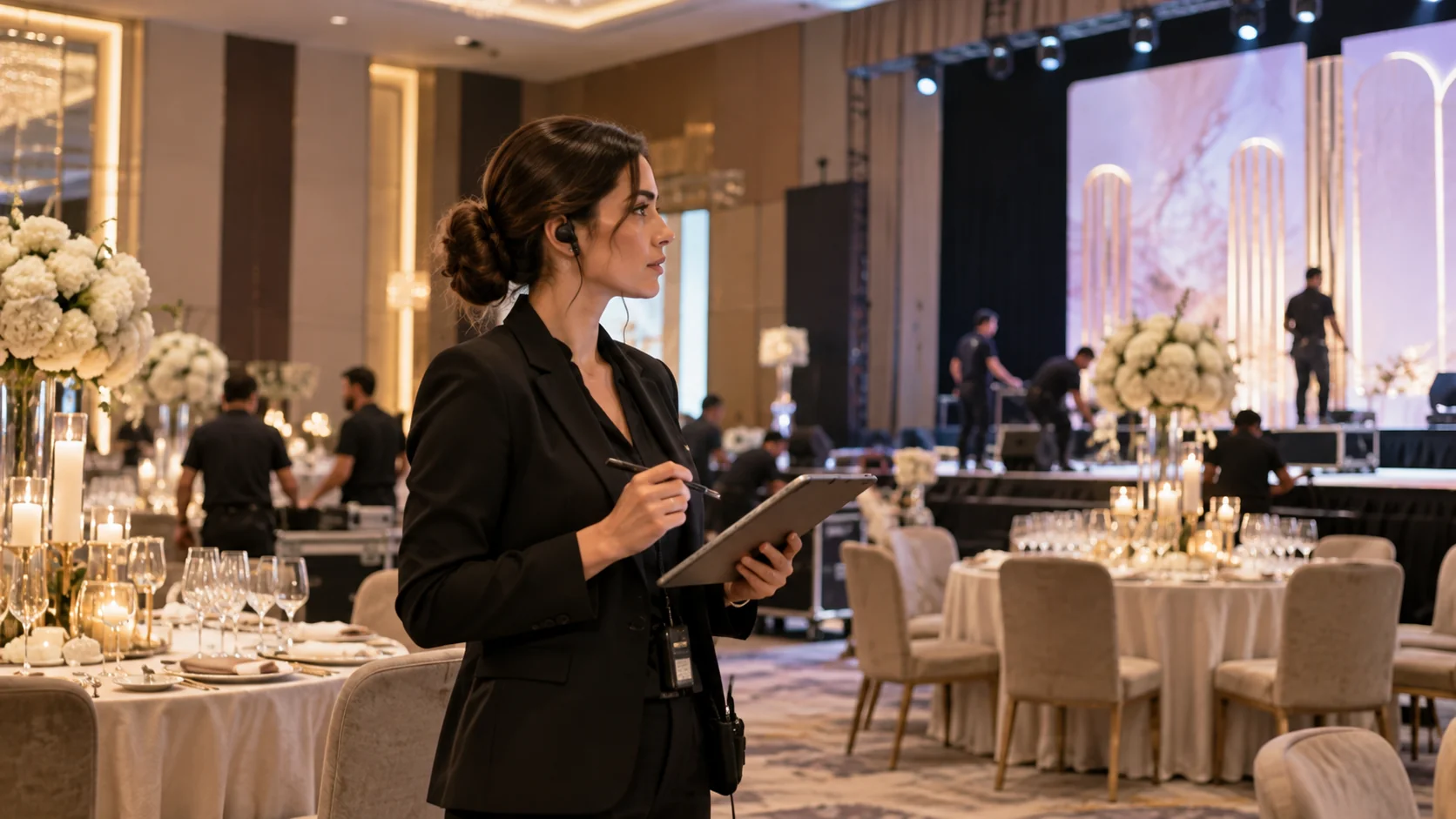
The amount of preparation required depends on event complexity.
A simple private dinner may be organised relatively quickly when a suitable venue is available.
A large corporate celebration involving bespoke staging, entertainment, multiple suppliers or international guests will generally require considerably more preparation.
Allow time for initial consultation, venue selection, concept development, quotations, supplier confirmations and internal approvals.
Once the main arrangements are agreed, attention can shift to invitations, programmes, final guest numbers, technical coordination and rehearsals.
Leaving important decisions until the final stages can restrict choices and increase pressure on everyone involved.
Early planning doesn’t mean every detail must be finalised immediately.
It means identifying the decisions that affect other parts of the event and resolving them in the right order.
12. Avoid These Common Corporate Event Planning Mistakes
Even experienced internal organisers can encounter problems when planning an unfamiliar type of event.
Some of the most avoidable mistakes include:
Booking a venue too early: Confirming a space before understanding staging, production, catering or layout requirements.
Requesting quotations without a clear brief: Suppliers cannot provide genuinely comparable proposals when the required services haven’t been defined.
Focusing exclusively on appearance: Exceptional décor cannot compensate for poor sound, uncomfortable seating or an unmanageable programme.
Overloading the schedule: Too many speeches, performances or presentations can exhaust the audience.
Ignoring setup and rehearsal requirements: A venue booking may cover the event itself but leave inadequate time for preparation.
Dividing responsibility between too many people: When nobody has overall responsibility, important tasks can be overlooked.
Avoiding these mistakes often requires no additional expenditure, simply better planning and clearer communication.
13. Prepare a Useful Brief Before Contacting an Event Company
Providing a good initial brief helps an event company understand your requirements and respond with relevant recommendations.
You don’t need to have every answer, but sharing the information already available will make the process more productive.
Ideally, include the company name and contact details, proposed event date, preferred location or venue, approximate guest numbers, event objectives and intended format.
It is also helpful to provide anticipated timings, entertainment requirements, production needs and an approximate budget.
If some details remain undecided, identify them clearly.
For example, explaining that you’re considering a seated awards dinner for approximately 200 guests, with live entertainment and a formal presentation, is considerably more useful than simply requesting a price for a corporate event.
The more clearly the brief reflects your expectations, the easier it becomes to develop a suitable event plan.
Frequently Asked Questions About Corporate Event Planning in Dubai
How far in advance should we book a corporate event in Dubai?
The ideal lead time depends on the scale, date and complexity of your event. Popular venues and specialist suppliers may need to be secured well in advance, particularly during busy periods. Starting early generally provides more flexibility.
Do we need an event management company for a corporate dinner?
Not necessarily. A straightforward dinner may be managed internally with the venue. However, events involving substantial production, entertainment, bespoke design or multiple suppliers can benefit from professional coordination.
Can we organise an outdoor corporate event in Dubai?
Yes, subject to appropriate venue arrangements, seasonal weather conditions and applicable permissions. The cooler months are usually more suitable for outdoor guest experiences, although practical contingency planning remains important.
What information should we provide to receive an accurate quotation?
Provide your proposed date, event location, guest numbers, timings, objectives, required services and approximate budget. These details help an organiser understand the scope and prepare a relevant proposal.
Make Your Next Corporate Event a Success

Corporate event planning in Dubai presents remarkable opportunities, but successful delivery depends on the decisions made well before guests arrive.
From selecting the right venue and entertainment to coordinating technical production, hospitality and event logistics, every element should support the purpose of the occasion.
Whether you’re planning an intimate executive dinner, a company anniversary celebration or a large-scale corporate awards ceremony, early preparation and experienced management can make a significant difference.
The Event Company Dubai provides corporate event planning, management, entertainment and production services for businesses seeking professionally organised occasions.
If you’re considering an upcoming corporate event, we’d be delighted to discuss your requirements and explore the most suitable approach.
Contact The Event Company Dubai to discuss your event.
